 By LCTeam
 Many drivers assume casual footwear violates traffic laws, but the truth is more nuanced. While flip-flops are not explicitly banned in any U.S. state, they can lead to legal consequences if they interfere with your ability to safely operate a vehicle. In 2026, the issue remains one of driver responsibility and liability, rather than a direct footwear prohibition.
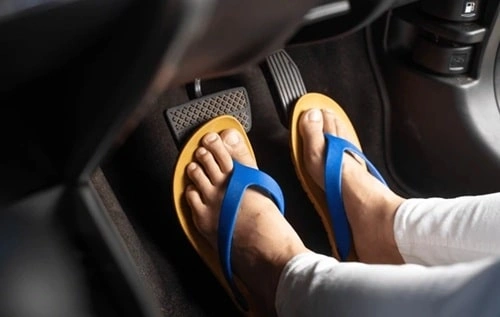
1. No U.S. State Bans Flip-Flops Behind the Wheel
Contrary to popular belief, no state in the country has a law that specifically prohibits wearing flip-flops, sandals, slides, or other open-toed footwear while driving. That includes strict-regulation states such as:
- California
- New York
- Florida
- Texas
- Illinois
State traffic codes focus on actions that impair driving—such as texting, DUI, reckless driving—not on footwear choices.
However, the absence of a specific footwear law does not mean drivers are free from legal responsibility.
2. How Flip-Flops Can Lead to Legal Trouble
Driving with flip-flops becomes a legal issue when it impacts your ability to control your vehicle. U.S. traffic laws universally require that drivers maintain full control of their vehicle at all times.
Flip-flops can:
- Slip off unexpectedly
- Get caught under the brake or gas pedal
- Reduce brake pressure
- Delay reaction time
- Interfere with pedal grip
If any of these factors contribute to unsafe driving, then flip-flops can become the basis for other traffic violations.
Possible citations include:
- Careless driving
- Negligent operation
- Improper control of a vehicle
- Reckless driving (in extreme cases)
In other words, flip-flops themselves aren’t illegal—but the consequences of wearing them can be.
3. Flip-Flops and Accident Liability
If a driver wearing flip-flops causes or contributes to an accident, the footwear may become part of the legal evaluation.
Police may note in the accident report:
- “Improper footwear contributed to loss of control.”
- “Driver’s flip-flop obstructed pedal.”
Such notes can significantly affect fault determination.
Insurance companies may argue:
- The driver acted unreasonably.
- The accident was preventable with proper footwear.
- The driver is partially or fully responsible.
This can reduce or deny insurance payouts under comparative negligence laws.
If a personal injury lawsuit follows, an attorney may argue that the driver failed to exercise reasonable care by operating a vehicle with unstable footwear.
4. Commercial Drivers Face Stricter Internal Rules
While state law does not ban flip-flops, many employers and transportation companies do.
Organizations such as:
- Trucking companies
- Delivery services (Amazon, UPS, FedEx)
- Rideshare platforms (Uber, Lyft)
- City transit agencies
often prohibit open-toed or loose-fitting shoes during driving shifts.
Violating these internal policies can result in:
- Termination
- Contract violations
- Insurance coverage issues
5. Barefoot Driving Versus Flip-Flop Driving
Interestingly, most states allow driving barefoot. In many situations, operating a vehicle barefoot can offer better pedal control than wearing loose flip-flops. Law enforcement officers often note that flip-flops are riskier than driving without shoes because they can slip or wedge under pedals.
6. Attorney’s Advice: What Should Drivers Do in 2025?
From a legal and safety perspective, the most responsible approach is to avoid wearing flip-flops while driving—especially during long trips or heavy traffic.
Best practices:
- Wear closed, secure footwear while driving.
- Keep shoes in the car and change after parking.
- Avoid footwear that can slip, snag, or fall off.
Remember: it’s not the footwear that gets drivers in trouble—it’s the loss of control.
Conclusion
In 2026, driving with flip-flops is not illegal in any state. However, if wearing them leads to unsafe driving or contributes to an accident, the driver can face citations, financial liability, and even civil lawsuits. The issue is not the flip-flops themselves but whether they compromise a driver’s ability to safely operate a vehicle.