 By LCTeam
 Eating behind the wheel is something many drivers do grabbing a quick bite on the way to work, sipping coffee during a long commute, or snacking on the road. But as distracted driving awareness continues to grow in the United States, many people wonder: Is it actually illegal to eat while driving?
The short answer is no, eating while driving is not outright illegal in most states. There is no federal law that bans the practice, and very few states explicitly prohibit it. However, that does not mean it is always safe—or that you can’t be cited for it.
Instead of banning food specifically, states rely on broader distracted driving laws that make it illegal to operate a vehicle without proper control or when your attention is diverted. This means that while holding a burger or sipping a drink is not a crime by itself, the moment it interferes with your ability to drive safely, you could face penalties.
How Distracted Driving Laws Apply to Eating
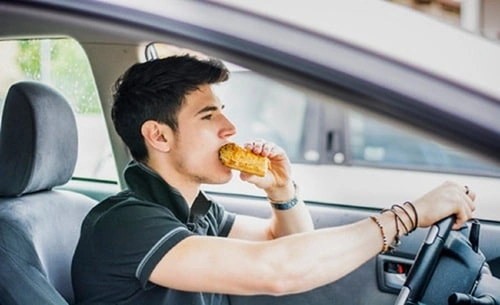
Distracted driving comes in three forms: manual, visual, and cognitive. Eating can fall into all three categories:
- Manual distraction: Your hands leave the wheel.
- Visual distraction: You take your eyes off the road to look at food or wrappers.
- Cognitive distraction: You focus more on eating and less on driving.
Because of this, police can issue citations when eating contributes to unsafe driving behavior. Most states have laws allowing officers to ticket drivers for careless, reckless, or negligent driving—and eating is often considered a contributing factor.
For example:
- Swerving while reaching for a snack
- Dropping food and unexpectedly braking
- Driving with only one hand on the wheel
- Losing attention because of a hot drink spill
Even if the food itself is not banned, the unsafe driving it causes can still lead to a citation.
Which States Specifically Address Eating While Driving?
While no state outright bans all forms of eating while driving, some states include food-related distractions in broader laws:
- New Jersey once proposed a bill targeting eating behind the wheel, but it did not pass.
- Arizona, Georgia, California, and Florida have distracted driving laws that allow officers to cite drivers whose actions—including eating—affect safe driving.
- Hawaii and Alaska consider food distractions under careless driving statutes.
In many states, an officer does not need a specific “eating while driving” law to issue a ticket. If your actions show you are not in full control of the vehicle, they can legally stop and cite you.
Potential Penalties for Eating While Driving
If eating contributes to dangerous driving, penalties may include:
- Fines (often ranging from $50 to $250 depending on the state)
- Points on your driving record
- Increased insurance premiums
- Reckless driving charges in severe cases
- Civil liability if distracted eating causes an accident
If an accident occurs, the consequences become much more serious, and eating behind the wheel can be treated as a major contributing factor.
Safe Driving Recommendations for 2025
Law enforcement agencies and traffic safety organizations continue to emphasize responsible driving habits. To reduce risk:
- Avoid meals while driving; eat before or after your trip.
- If you must snack, choose simple, easy-to-handle items.
- Avoid foods that are messy, greasy, or require two hands.
- Pull over safely if food or drink becomes a distraction.
- Keep drinks in secure, spill-proof containers.
Small adjustments can prevent accidents and reduce legal risk.
Conclusion
Eating while driving is not illegal in most parts of the United States. However, it can still lead to consequences if it interferes with your ability to drive safely. Distracted driving laws give officers the authority to cite drivers whose actions—whether texting, applying makeup, or eating—put others at risk.
The best approach is simple: keep your focus on the road, and save meals for a safer moment.